Scalable Business Systems: Why Busy Does Not Mean Scalable
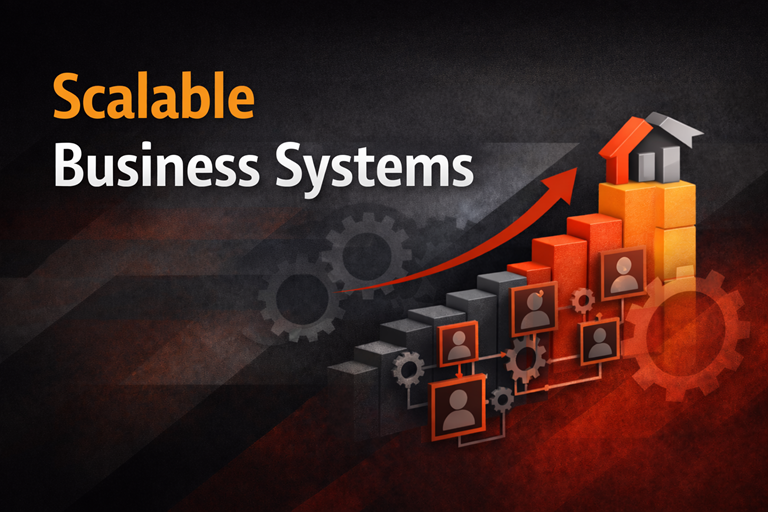
Scalable business systems determine whether growth creates leverage or friction. Many founders confuse activity with scalability, but real scale depends on authority clarity, workflow discipline, and structured reporting. If your company feels busy yet fragile, the issue is not effort. It is system design.
What Real Operational Scalability Looks Like
At its core, a scalable operating model allows a company to grow revenue, headcount, and complexity without increasing chaos or margin erosion.
Many service businesses equate busyness with strength:
• Full calendars • Rapid hiring • Constant client communication • High internal meeting frequency
These signals feel productive, but they are not proof of readiness.
If every approval requires executive involvement, the organization is constrained. If onboarding depends on verbal instruction, consistency will break under pressure. If forecasting accuracy declines as revenue rises, the structure is lagging.
Bain & Company research reinforces that redesigning operating models at each growth stage protects performance stability: https://www.bain.com/insights/
Revenue growth without reinforcement increases exposure. Growth supported by disciplined structure increases enterprise value.
Evaluating Your Readiness to Scale
Ask yourself:
• Has decision speed slowed over the past year • Has hiring increased without workflow redesign • Are approvals concentrated at the top • Are roles overlapping • Is forecasting reactive
If multiple answers are yes, activity has outpaced architecture.
Scalable business systems reduce friction, protect margin, and expand leadership bandwidth. They transform growth from stress into leverage.
The difference between fragile growth and durable scale is disciplined design.
Tomo shares his expertise through in-depth articles and across his social media platforms via video content and curated posts. Follow for continued insights and updates.
Note: Not all articles are contributed by Tomo. Refer to Article Author for details.
GetSysPro is a specialized business consultancy, mostly helping Real Estate companies and professionals achieve operational excellence.
Starting and Scaling your Real Estate Investment journey doesn’t have to feel scammy, transactional, or inauthentic. We’ll show you how to create a Real Estate company, build a rolodex of essential partners, and create essential systems and processes, without wasting years playing trial and error.


 06/05/2023