

Startup Property Management Company
Project Overview
This representative portfolio project illustrates the operational development and rapid growth of a startup property management company launched in the Memphis, Tennessee market. The company was created to support a growing pipeline of real estate investors acquiring single family rental properties in the region.
At the time operations began, the organization had no employees, no operational infrastructure, and no properties under management. The goal was to build a professional property management platform capable of supporting investors purchasing rental properties in the Memphis market while maintaining consistent service delivery to both property owners and tenants.
Tomo Oblak joined the organization in the role of Chief Operating Officer and was responsible for building the operational foundation of the company. His responsibilities included designing the business structure, implementing operational systems, hiring and training staff, establishing vendor networks, and deploying the management frameworks required to support long term scalability.
Within approximately eighteen months, the organization grew from a complete startup to a management portfolio of roughly 740 single family homes while simultaneously building an operational team capable of managing the expanding portfolio.
Many organizations at this stage benefit from structured operational planning and system design. Services such as a Business Operational Systems Audit can help identify the structure required to support long term growth.
https://www.getsyspro.com/service/business-operational-systems-audit/
Project Snapshot
The following snapshot summarizes the key characteristics and operational scope of the organization during the project. It highlights the business environment, growth stage, and structural elements that shaped the operational systems implemented during the engagement.
Industry
Market
Organization Stage
Systems/Infrastructure Implemented
Leadership/Management Services
Main Growth Differentiators
Organizational Background
The company was established to support a growing group of real estate investors purchasing rental properties in the Memphis area. Many of these investors were located outside the region and relied on a local management company to oversee property operations.
Because the organization launched as a complete startup, no operational procedures, systems, or personnel were in place at the beginning. The business required a fully designed operational structure capable of supporting rapid portfolio expansion while maintaining service consistency and transparency for property owners.
Building the company required the development of operational infrastructure across every department. This included organizational design, hiring processes, technology implementation, vendor management, tenant communication procedures, and financial reporting systems for investors.
Establishing clear systems and documented workflows early can significantly improve scalability for growing organizations. Structured system implementation is often the foundation for operational stability.
https://www.getsyspro.com/service/fractional-coo-leadership/
Operational Challenges
Launching a startup property management company while supporting a rapidly growing portfolio required solving several operational challenges simultaneously.
The most significant challenges included:
• Building a complete organizational structure from the ground up
• Creating documented operational processes for all departments
• Managing rapid onboarding of newly acquired properties
• Establishing consistent tenant communication workflows
• Coordinating maintenance requests across a growing number of properties
• Delivering financial reporting transparency for remote investors
• Developing leasing and tenant placement systems
• Building vendor relationships for repairs and property renovations
• Implementing property inspection procedures to maintain asset quality
Because the majority of property owners were located outside the Memphis market, communication systems and reporting transparency were essential components of the operational design.
Strategic Approach
The strategic approach focused on building scalable systems before the organization reached large portfolio size. The goal was to create a structured company capable of supporting rapid expansion without operational instability.
Tomo Oblak designed the operational architecture of the company and implemented the leadership and management frameworks required to support growth.
Key components of the strategy included:
• Designing the full business structure and operational model
• Creating organizational hierarchy and department responsibilities
• Developing job descriptions and hiring frameworks
• Implementing the Buildium property management platform
• Designing operational workflows for leasing, maintenance, inspections, and reporting
• Establishing vendor networks and contractor relationships
• Implementing tenant communication standards
• Creating investor reporting systems and financial transparency
• Deploying the Entrepreneurial Operating System framework to structure leadership accountability and operational planning
Organizations that adopt structured operational frameworks early often experience smoother scaling and improved team accountability.
Implementation Process
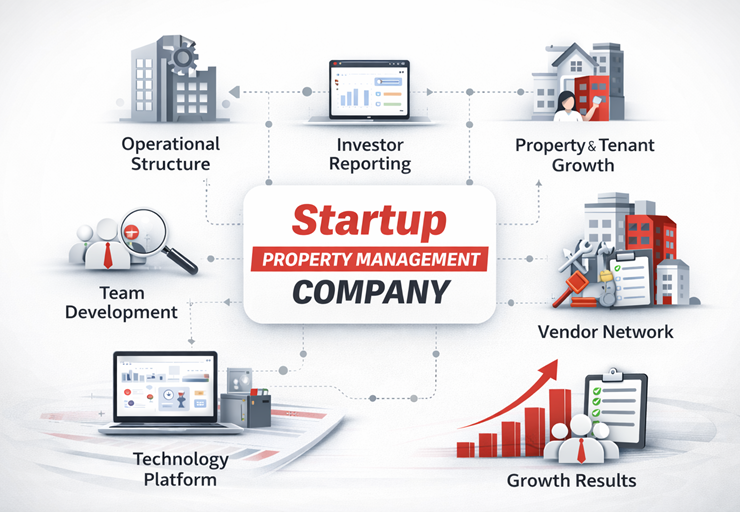
The organization was built through a structured implementation process that combined operational design, technology deployment, and team development.
Operational Architecture
The first step involved designing the operational framework of the company. This included defining departmental responsibilities, establishing leadership roles, and creating workflows for property management operations.
Technology Implementation
The Buildium property management system was deployed to centralize property accounting, tenant communication, maintenance tracking, lease management, and investor reporting.
Process Documentation
Standard operating procedures were created for all major operational functions including leasing, tenant onboarding, maintenance coordination, rent collection, property inspections, and financial reporting.
Team Development
As the portfolio expanded, the organization grew from zero employees to approximately twenty four team members. Hiring, onboarding, and operational training were managed directly by Tomo Oblak.
Operational Scaling
As the portfolio expanded rapidly, internal maintenance teams were added to complement third party vendors. This hybrid maintenance model improved repair response times and operational efficiency.
Operational Systems Implemented
Several operational systems were implemented to support the management of a rapidly growing property portfolio.
Leasing and Tenant Placement
The company developed internal leasing systems that included property marketing, tenant screening, lease preparation, and move in coordination.
Tenant Screening Standards
Structured tenant screening procedures were implemented including income verification, credit analysis, background checks, and eviction history evaluation.
Maintenance Coordination
A hybrid maintenance model was implemented that combined external contractors with internal maintenance teams as the portfolio expanded.
Property Turns
Turnover renovations between tenants were managed internally to reduce vacancy time and maintain quality control.
Property Inspections
Inspection procedures were established including move in inspections, periodic inspections, and move out inspections to monitor property condition.
Vendor Network Development
A network of vetted contractors and service providers was created to support repairs, maintenance, and renovation work across the portfolio.
Legal and Eviction Coordination
The company coordinated legal procedures with third party attorneys while managing notices, documentation, and court appearances on behalf of property owners.
Investor Reporting
Financial reporting and owner statements were delivered through the Buildium platform to provide transparency and operational visibility for investors.
Results and Operational Impact
The operational systems implemented during the startup phase allowed the company to scale rapidly while maintaining service stability.
Key results included:
• Portfolio growth from zero to approximately 740 homes within eighteen months
• Expansion from zero employees to approximately twenty four team members
• Implementation of full service property management operations
• Structured leasing, maintenance, and tenant management workflows
• Vendor network and maintenance coordination systems
• Financial reporting systems for investors
• Market expansion from Shelby County into North Mississippi
The organization continues to operate and has reportedly expanded to approximately 1,300 properties under management.
Lessons for Property Management Startups
This project demonstrates the importance of operational systems when launching a property management company. Many property management businesses struggle not because of lack of demand but because operational infrastructure is implemented too late.
Several key lessons emerged from this project:
• Operational systems should be established before rapid portfolio growth occurs
• Organizational structure becomes critical when managing hundreds of properties
• Tenant communication procedures must be standardized early
• Vendor networks and maintenance coordination require clear workflows
• Investor reporting transparency is essential when serving remote property owners
Next Step
Businesses experiencing rapid growth often benefit from reviewing their internal systems and operational frameworks. Establishing clear structure early can prevent operational bottlenecks later.
If your organization is experiencing similar operational challenges, a structured operational review may be the right starting point.
Business Operational Systems Audit
https://www.getsyspro.com/service/business-operational-systems-audit/
Contact GetSysPro
https://www.getsyspro.com/contact-us/